Ergonomics in industry is usually discussed in terms of lifting: loads, postures, repetition, the injuries that come from handling things badly. Office and control-room work produces musculoskeletal problems too, and they are easy to miss because nothing obviously heavy is involved.
Why holding still is a load
Muscles are designed to alternate between work and rest. A posture held without variation keeps low-level tension in the same muscle groups for hours, restricts circulation to loaded tissue, and loads spinal structures continuously rather than intermittently.
The result is familiar: neck and shoulder tightness, low back ache, wrist and forearm discomfort, eye strain and headaches. Individually these are minor. Sustained over months they become the reason people take time off, and they are the kind of injury that develops slowly enough that nobody reports it until it is entrenched.
What a practical assessment looks at
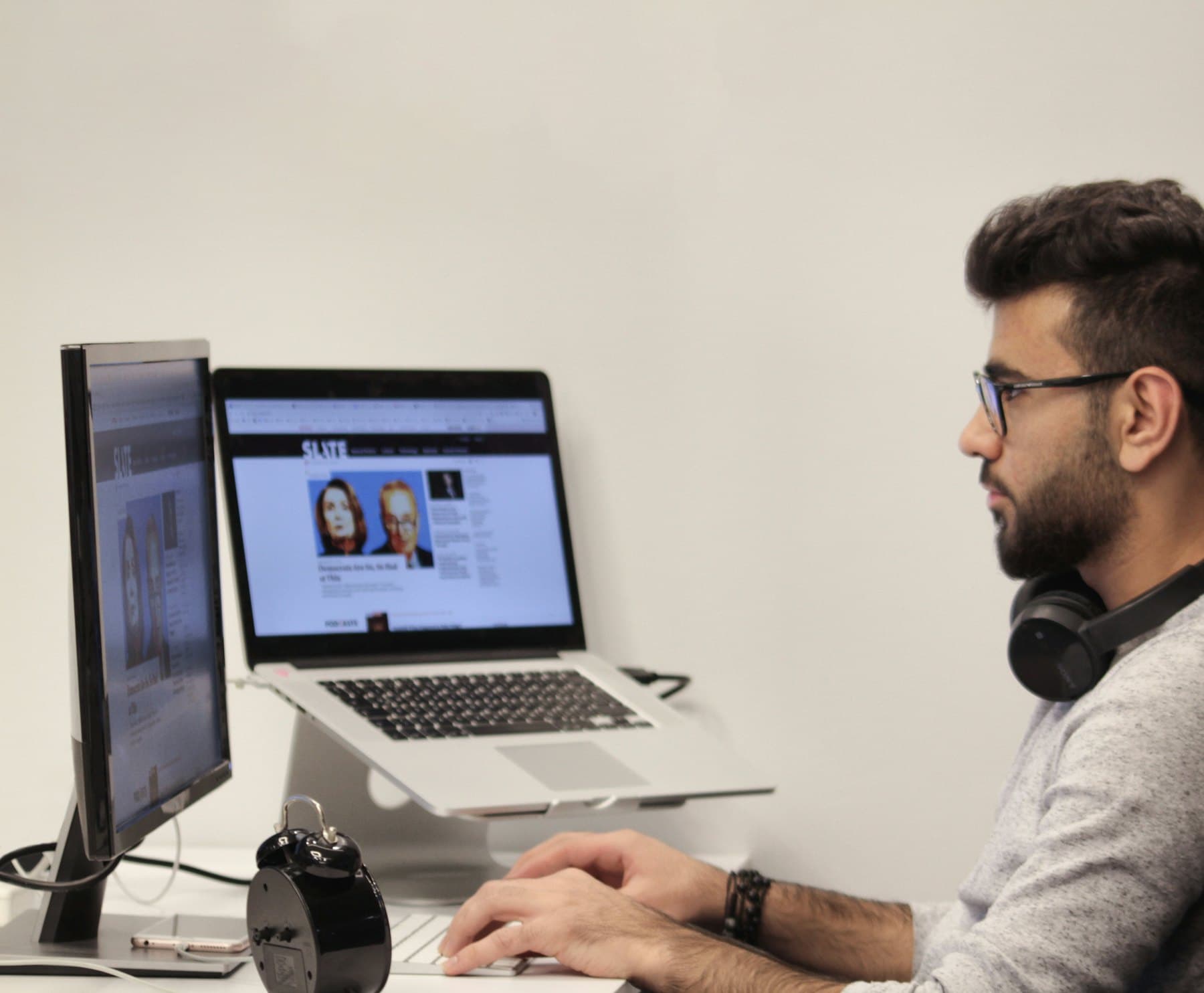
A workstation assessment does not need specialist equipment. It needs somebody to look at the whole task:
- Seating — is the height set so feet are supported and thighs roughly level? Is the back supported, particularly the lower back?
- Screen — is the top of the screen near eye height, at a comfortable viewing distance, and free of glare from windows and lights?
- Keyboard and mouse — close enough that the upper arms hang naturally, with wrists straight rather than bent up or sideways?
- Space — is there room under the desk, or is it a storage area?
- Laptops — used on a desk all day without a separate keyboard, mouse or riser, a laptop forces a compromise between the neck and the wrists. It usually needs additional equipment.
- Duration — how long is the posture actually held without a break? This is the factor most often left out.
Movement beats equipment
Good equipment removes obstacles. Movement is what changes the outcome. Practical measures that cost nothing:
- Change posture at intervals rather than waiting for discomfort.
- Stand for calls and short discussions.
- Take the longer route to the printer, the canteen or the next meeting.
- Look at something distant periodically to rest the eyes.
- Break long screen sessions with tasks that involve a different posture.
Sit-stand desks help when people actually alternate. They help very little when the height is set once and never changed again.
Treat early reports as useful information
The most valuable thing an ergonomics programme can produce is early reporting. Discomfort mentioned in week two is usually resolved by an adjustment. The same problem raised in month eight may involve clinical treatment and lost time.
That requires a culture where saying "my shoulder aches by lunchtime" is treated as information rather than complaint — and a route for acting on it that does not require a formal process.
Where this fits
Sedentary work sits in the same family as manual handling: postures, forces, repetition and duration. The controls differ, the assessment discipline does not. Our workplace ergonomics training covers assessment of both, so a site can look at its desks with the same eye it uses on its lifting tasks.
Content adapted from Eduforce's related safety and training publications.
Related training
Need help developing workplace safety capability?
Talk to Eduforce about training, consultancy and safety solutions.
Rakesh Temkar
Author
Writes on first aid, health and workplace safety for Eduforce.