Drinking water tends to appear in the welfare section of a site plan, somewhere near the canteen arrangements. In practice it belongs closer to occupational health, because the failures are the kind that affect a lot of people quickly.
Treated water can still arrive contaminated
Water that leaves a treatment works fit to drink can pick up problems on the way to the tap. The usual routes are worth checking on any site:
- Storage tanks that are uncovered, unlined, rarely cleaned, or warm enough to encourage growth.
- Cross-connections between potable supply and process water, firewater, or any non-drinking system.
- Backflow from equipment and hoses into the drinking supply when pressure drops.
- Distribution through damaged, unsuitable or long-stagnant pipework, and dead legs that are rarely flushed.
- Dispensers and coolers whose filters and drip trays are never serviced.
A tank cleaning and inspection schedule, a record of what was done and when, and a check on which supply feeds which outlet will answer most of these questions.
Access decides how much people actually drink
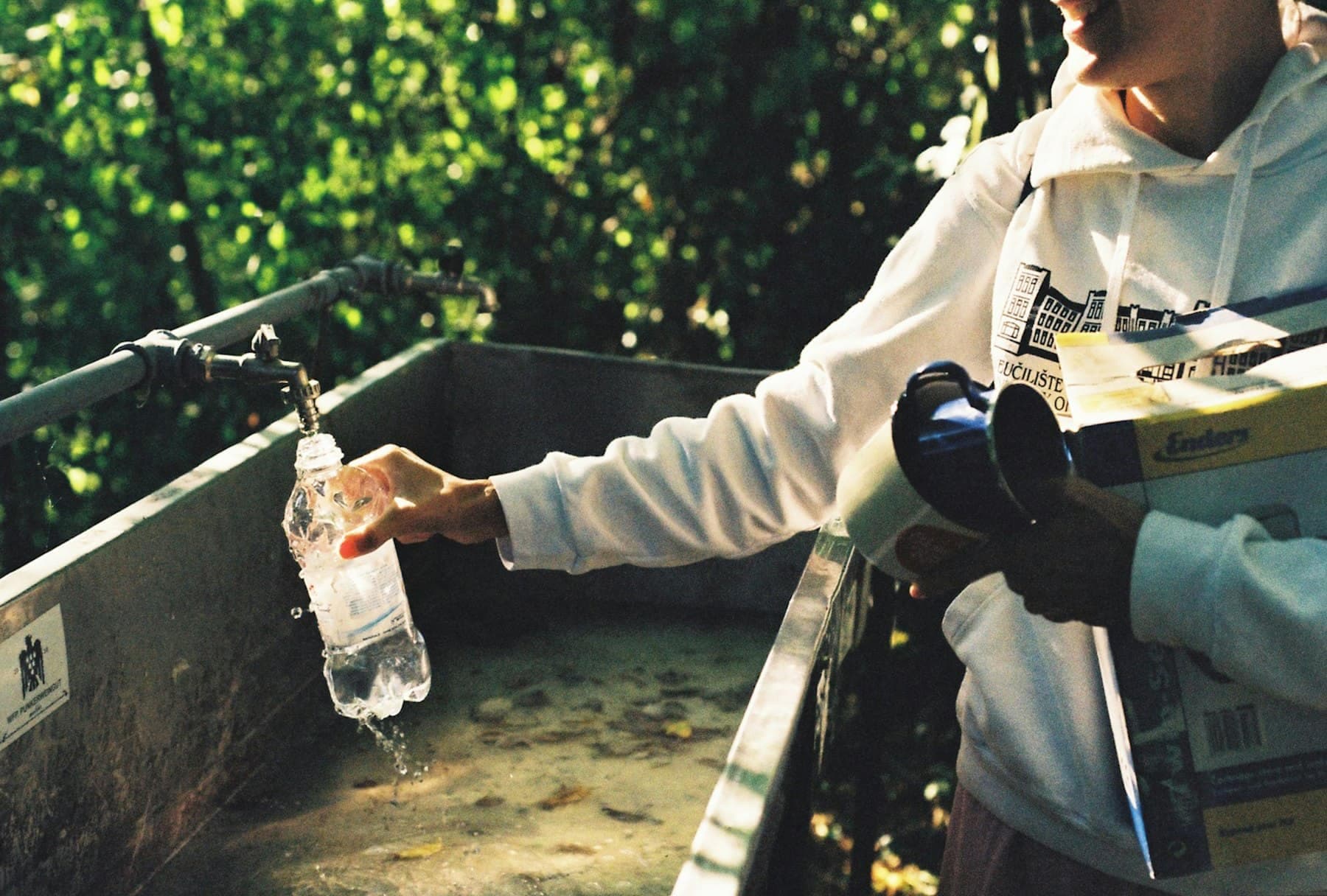
Whatever is provided, intake is determined by how easy it is to get at. A supply that is far from the work face, up several flights, unpleasant to taste, or too warm results in people drinking less and taking fluid from whatever is nearer.
Practical checks:
- How far is the nearest outlet from where the work happens?
- Is it available throughout the shift, including night shifts?
- Is it cool enough to be drunk willingly in hot weather?
- Are outlets clearly marked, so nobody has to guess whether a tap is potable?
- Do remote work parties and vehicles carry their own supply?
Heat changes the requirement
In hot conditions, and in physically demanding work in protective clothing, fluid requirements rise steeply and dehydration develops faster than most people notice in themselves. Early effects — reduced concentration, slower reaction, poorer judgement — are exactly the ones that cause incidents in other parts of the operation.
Where heat is a factor, it is worth treating drinking arrangements as a control rather than an amenity: water available at the work face rather than at a distant point, scheduled breaks, shaded rest areas, and supervisors who look for early signs of heat illness in their crews.
Label the difference clearly
On industrial sites the most dangerous situation is a non-potable outlet that looks like a drinking one. Separate the systems physically, mark every outlet, use different fittings where you can, and include it in site induction. A hose that fills a drum today and is dropped in a puddle tomorrow should never be the one used for drinking water.
Where it belongs
Water quality, storage, access and heat sit naturally alongside the other occupational health exposures a site manages — dust, noise, fume, chemicals. Our industrial hygiene training covers recognising and evaluating exposures of this kind, and our consultancy team can look at the arrangements on a specific site.
Content adapted from Eduforce's related safety and training publications.
Related training
Need help developing workplace safety capability?
Talk to Eduforce about training, consultancy and safety solutions.
Rakesh Temkar
Author
Writes on first aid, health and workplace safety for Eduforce.