Tanks, pits, sumps, ducts, silos, manholes. The list of places that count as a confined space is long, and the reason they are dangerous is always the same: something in the space can hurt you, and the way out is not easy. What makes them lethal is that the hazard is usually invisible and the rescuer is usually the second casualty.
Every confined-space procedure worth having comes down to five questions. If a job cannot answer all five, the entry does not start.
1. Is this actually a confined space — and does it need entry at all?
A confined space is any enclosed or partially enclosed space that is not designed for continuous occupancy and has restricted entry or exit, where a hazardous atmosphere, engulfment, or another serious risk is reasonably foreseeable. Size is not the test; a large open-topped tank can be a confined space.
The first control is always avoid entry. Can the inspection be done with a camera, the cleaning with a jetting lance, the measurement with a probe? A surprising number of entries exist because "that is how we have always done it."
2. What is the atmosphere — now, and while the work goes on?
The three atmospheric killers are:
- Oxygen deficiency or enrichment — below 19.5% or above 23.5% by volume. Rust, rotting material, purging with nitrogen and even fresh concrete consume oxygen.
- Toxic gases — hydrogen sulphide in sewers and sumps, carbon monoxide from engines, solvent vapours from coatings.
- Flammable atmospheres — fuel vapours, methane, hydrogen from batteries.
Testing means a calibrated, bump-tested detector, sampling at the top, middle and bottom of the space before entry, and continuous monitoring while anyone is inside. A single reading at the hatch tells you what the air was like at the hatch, once. See our Atmospheric Gas Testing programme for the full method.
3. How is the space isolated?
Energy and substances must be stopped from entering the space while people are in it:
- Pipework physically isolated — blanked or double-block-and-bleed, not just a closed valve
- Mechanical equipment locked and tagged out with the entrant's own lock
- Electrical supplies isolated and proven dead
- Ventilation running and its effect confirmed by the gas readings, not assumed
Isolation is recorded on the permit with the person who did it and the person who checked it.
4. Who is the attendant, and what can they do?
The attendant (or "standby person") stays outside, in communication with the entrants, for the whole entry. Their job is to:
- Keep count of who is in the space
- Watch for changes — in the readings, in the entrants' behaviour, in the surroundings
- Raise the alarm and start the rescue plan without entering
- Stop the entry if any condition on the permit changes
The attendant cannot be pulled away to fetch tools, sign for a delivery, or help with another job. If they leave, the entrants come out.
5. How will you get them out?
This is the question that turns a permit into a survivable plan. "Call the fire brigade" is not a rescue plan for a space where a person has stopped breathing; by the time an external crew arrives, sets up and enters, the window has closed.
A rescue plan specifies:
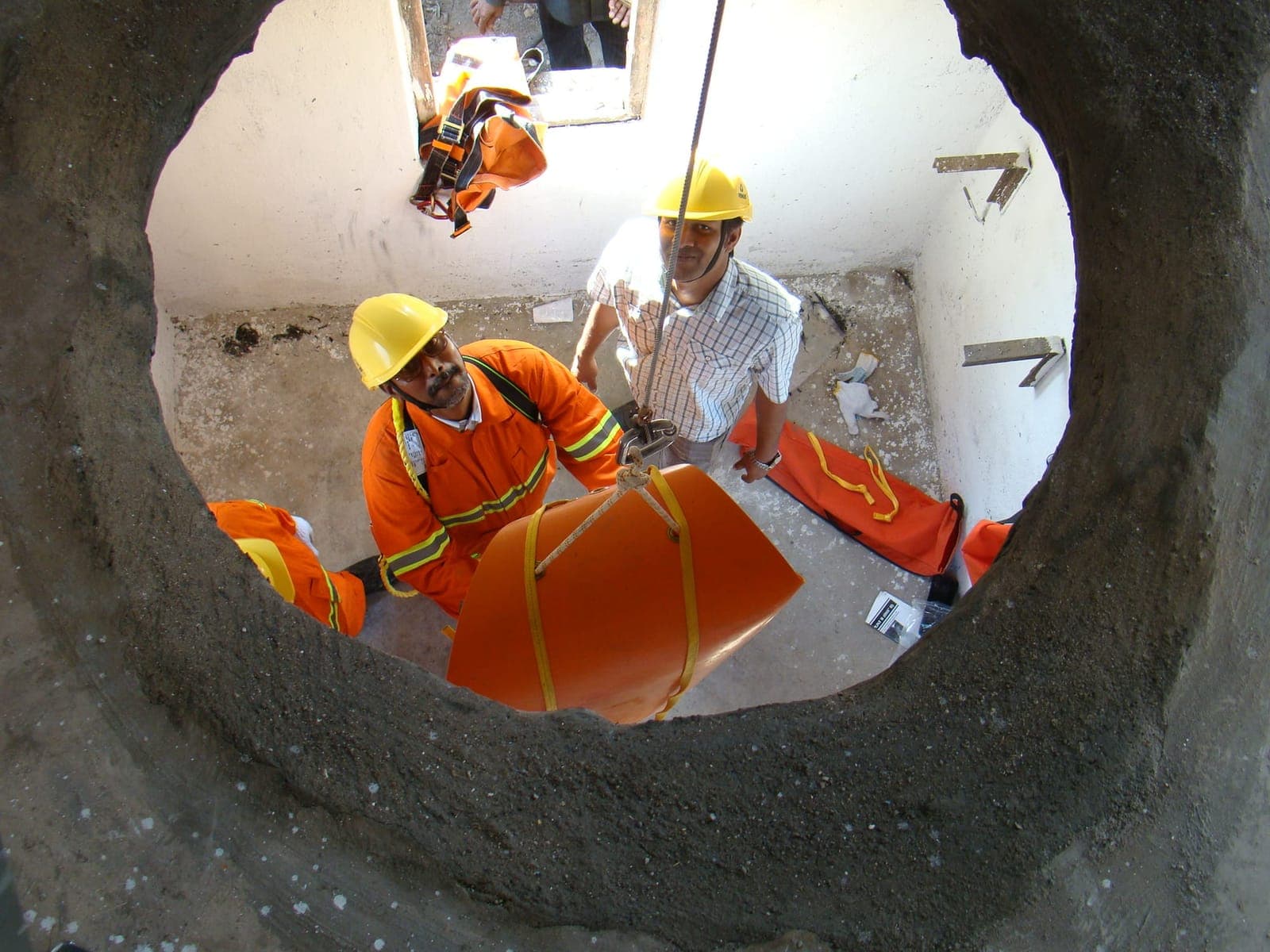
- The method — non-entry retrieval with a tripod and winch on a harness where the geometry allows it; entry rescue by a trained, equipped team where it does not
- The equipment, on site and checked before entry: retrieval system, breathing apparatus for entry rescue, first aid and resuscitation equipment
- The people — named, trained, present for the duration of the entry
- Communication with emergency services as a supplement, not a substitute
The rescue plan is rehearsed. A plan that has only ever existed on paper will not work the first time it is needed, which is why our Advanced Confined Space Entry & Rescue programme is practical from the first hour, in the confined-space simulator at our training centre.
The permit is the record of the answers
A permit to work is not a form to be filled in; it is the written record that the five questions were asked and answered by named people. When the answers are complete, the permit is easy. When a permit is hard to complete, it is usually because one of the questions has no answer yet — and that is the permit doing its job.
Start with Basic Confined Space Entry for entrants and attendants, or contact us about a programme built around your own spaces.
Related training
Related consultancy & audit services
Need help developing workplace safety capability?
Talk to Eduforce about training, consultancy and safety solutions.

Dr. Mona Gandhi
Founder Director, Eduforce
A postgraduate in Emergency Medicine and an internationally certified trainer, described in the Eduforce brochure as a distinguished personality, a skilled educator and motivator, and a successful safety trainer over many years.
More about Dr.