
GWO GWO Enhanced First Aid (EFA) Training
Extended casualty care for medical emergencies in remote wind environments.
The Training
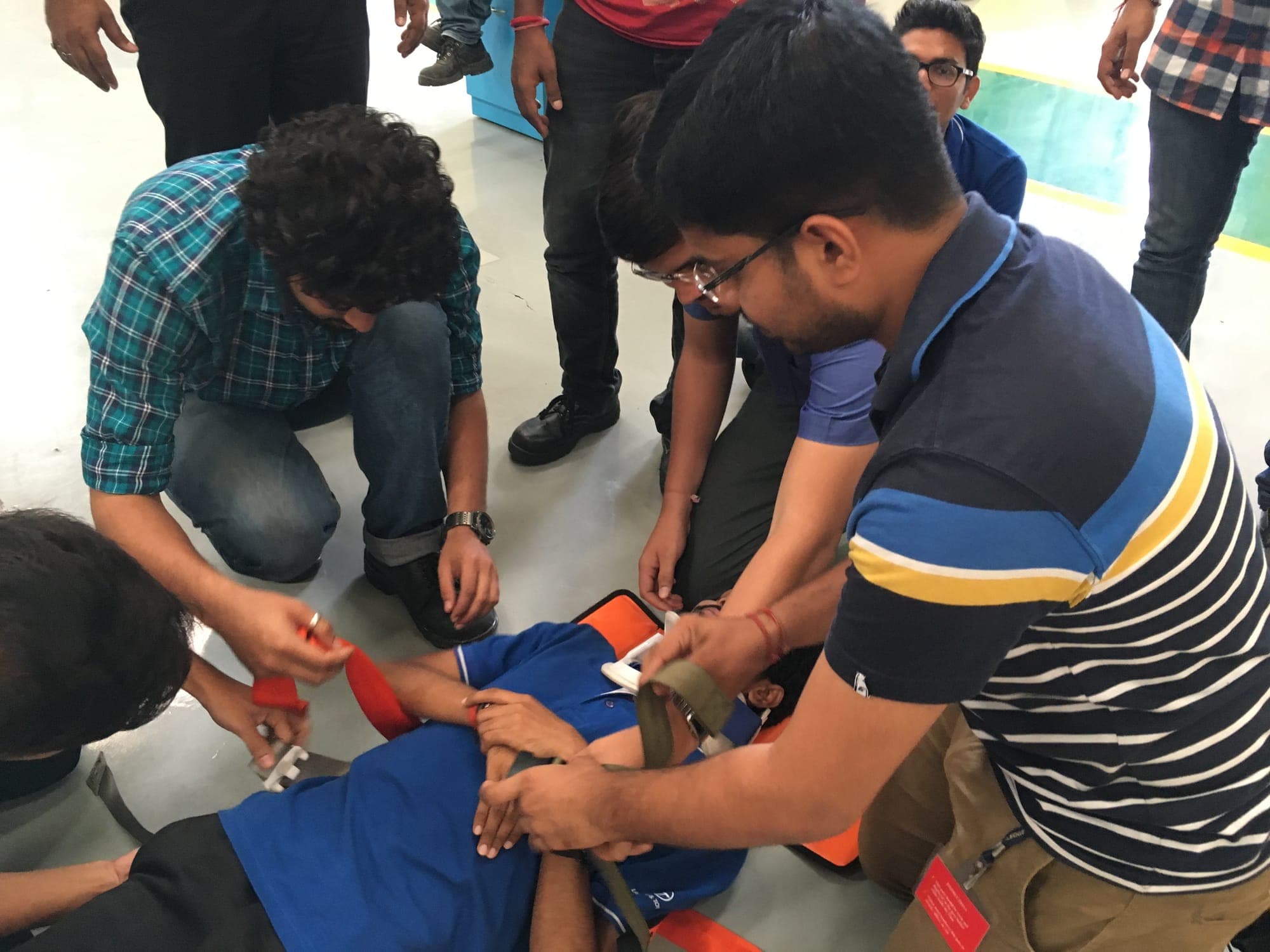
Training overview
Enhanced First Aid goes well beyond the foundation first aid taught in Basic Safety Training. It prepares designated responders to manage a casualty over an extended period in a remote location, using advanced equipment and drawing on telemedical consultation while waiting for professional emergency services.
The training assumes the responder may be operating alone, at distance, and for far longer than a typical first aid scenario allows. It therefore emphasises structured assessment, ongoing monitoring, and the ability to give a concise, useful casualty report when requesting assistance or advice.
Why this training matters
Offshore and remote onshore wind sites can be hours from definitive medical care. An enhanced responder is often the difference between stabilising a casualty and losing that window.
What you will learn
- Administer safe, effective and immediate lifesaving and enhanced first aid measures in turbine emergencies
- Act independently in remote areas using advanced equipment
- Manage emergencies and accidents in remote locations
- Request medical or rescue assistance with a concise casualty report
- Request telemedical consultation and obtain stabilisation advice
- Deliver enhanced first aid using primary and secondary survey methodology
Training pathways
Initial Training
The full programme, developing extended casualty care through practical emergency scenarios.
Duration: 21 hours
Refresher / Renewal
In transitionScenario-based refresher practice for designated responders, taken before the existing record expires.
Duration: 14 hours
Key knowledge
- Primary and secondary survey methodology
- Casualty monitoring over extended timeframes
- Use of advanced first aid equipment
- Telemedical consultation procedure and what information to provide
Practical skills
- Managing a casualty through prolonged scenarios
- Operating advanced first aid equipment
- Producing a concise casualty report for responders or telemedical advice
- Preparing a casualty for evacuation and handover
Competencies
- Act independently as an enhanced first aid responder in a remote location
- Deliver enhanced first aid using primary and secondary survey methodology
- Request and act on telemedical consultation
Key learning outcomes
- Emergency response management
- Advanced casualty care
- Patient monitoring and handover
- Telemedical consultation
Practical training
Built around realistic emergency scenarios where professional help is delayed and the responder must keep making decisions.