
GWO Wind Limited Access (WLA) Training
Safe behaviour for supervised, non-technical visits to wind assets.
The Training
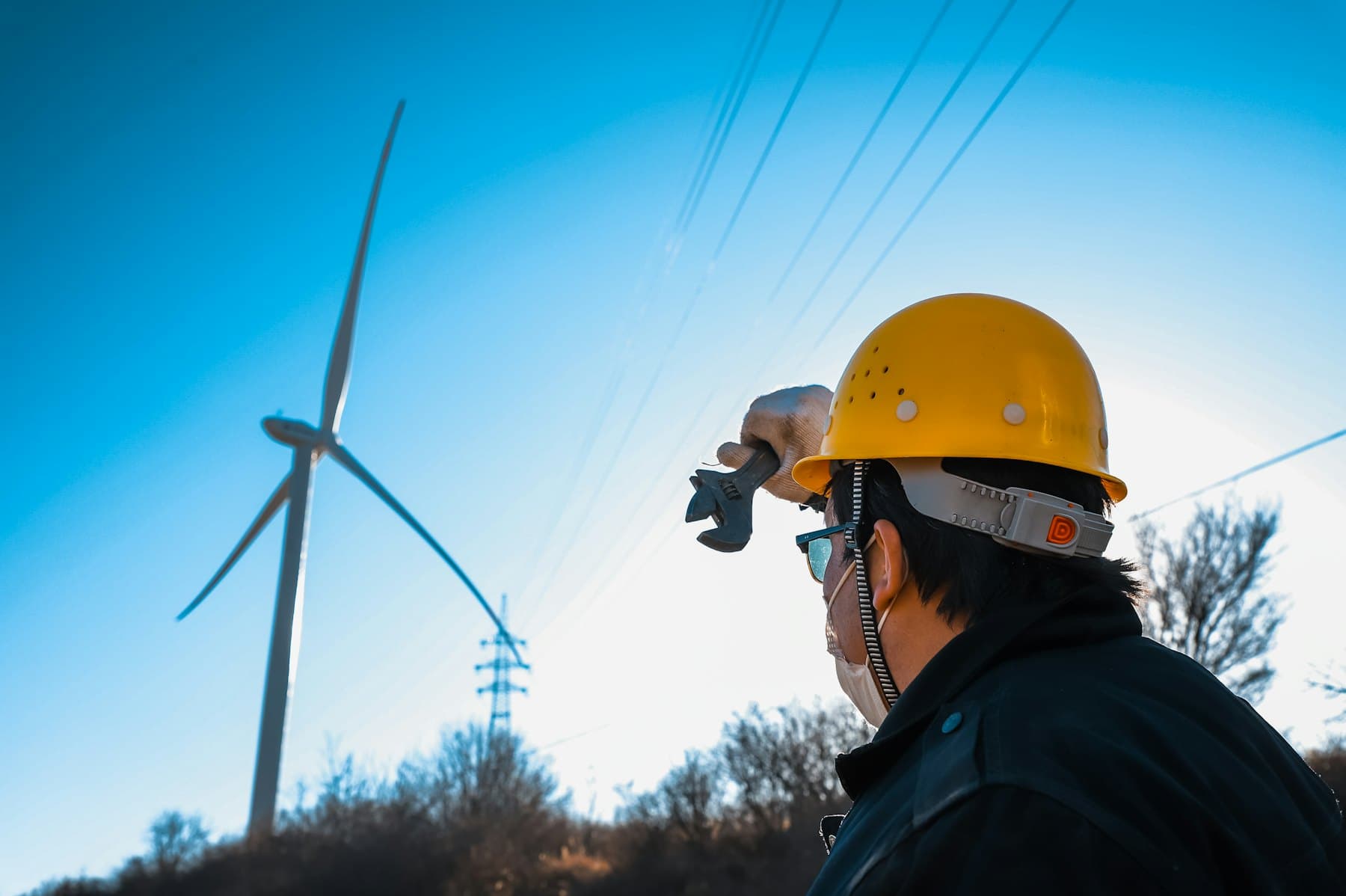
Training overview
Wind Limited Access prepares infrequent visitors — not technicians — to enter a wind turbine environment safely under supervision. It covers the hazards of a turbine, basic personal protective equipment, harness fitting and fall protection, and how to descend safely if evacuation is required.
The standard is unusually explicit about its limits. It does not provide the training necessary to enter energised assets or carry out work in an onshore or offshore environment — only to visit, inspect and observe while supervised by at least two experienced GWO BST trained persons. Anyone actually working in a turbine needs full Basic Safety Training.
The offshore module builds on the onshore module and adds sea survival and vessel transfer content. It cannot be taken on its own.
Why this training matters
Investors, inspectors, regulators and client representatives all need to see assets, and they arrive without the training a technician has. This standard gives them a proportionate, supervised route onto site without pretending they are qualified to work there.
What you will learn
- Act safely using basic personal protective equipment during a supervised visit
- Follow supervisor instructions responsibly
- Behave correctly in a supervised wind turbine environment
- Respond appropriately to a fire or medical emergency
- For offshore visits, demonstrate sea survival competencies and safe transfer
Training pathways
Initial Training
Delivered as the onshore module, or the onshore and offshore modules combined as a single day.
Duration: 3 hours 30 minutes per module; 7 hours contact time for both
Key knowledge
- Wind turbine hazards — electrical, slippery surfaces, hydraulic fluid, dropped objects, noise and environment
- Fire contingency planning, prevention and firefighting equipment identification
- Medical emergency notification procedures
- Human factors affecting behaviour on site
Practical skills
- Full-body harness fitting and adjustment
- Attaching self-retracting lifelines to harness points
- Fall prevention attachment to harness and anchor points
- Operating slider and glider vertical fall arrest systems
- Evacuation descent from a minimum height of 4.5 m using rescue devices
Safety and risk awareness
- Electrical hazards, slippery surfaces and hydraulic fluid
- Dropped objects and noise
- Additional fall protection must always be used during training activities at height
- Visits must be supervised by at least two experienced GWO BST trained persons
Competencies
- Use basic PPE safely during a supervised visit
- Follow supervisor instructions and behave appropriately on site
- Carry out pre-use equipment inspection using a generic approach across product types
- Descend safely during an evacuation
Key learning outcomes
- Basic personal protective equipment
- Safe behaviour during supervised visits
- Following supervisor instruction
- Offshore transfer considerations
Assessment
Ongoing performance assessment via the GWO Participant Performance Assessment form, with competency evaluated throughout the practical exercises.
Practical training
Harness fitting, fall protection attachment and evacuation descent from a minimum height of 4.5 m, with additional fall protection always used during training at height.
Important information
- The standard states it does not provide the training necessary to enter energised assets or carry out work onshore or offshore — only to visit, inspect and observe when supervised by at least two experienced GWO BST trained persons.
- It also does not prepare participants for visits to assets with increased safety risks, such as faulty turbines or those under construction.
- Onshore training: maximum 5 hours total per day, at a 1:12 theory and 1:6 practical instructor ratio.
- Combined onshore and offshore training: maximum 7 hours contact time within a 10-hour day.