Most workplaces have a first aid kit. Rather fewer can say when it was last opened, who is responsible for it, or whether what is inside matches the injuries the work can actually cause.
Start from your own risks, not a generic list
A kit assembled from a catalogue tends to be adequate for paper cuts and irrelevant to everything else. The better starting point is your own risk assessment. Ask what this site can realistically produce:
- Cuts and lacerations — dressings in several sizes, sterile pads, adhesive tape, disposable gloves.
- Burns — clean, non-adhesive dressings and a means of cooling. Thermal, chemical and electrical burns are different problems; know which ones apply to you.
- Chemical exposure — eye irrigation, and access to the safety data sheet for anything held on site.
- Sprains, crush and impact injuries — triangular bandages, supports, and a plan for immobilisation and moving a casualty.
- Dust, fume and heat — where these are present, they change both the kit and the response.
If your site works at height, in confined spaces or around live electrical systems, the realistic worst case is not a cut finger, and the provision should reflect that.
Accessibility matters more than completeness
A comprehensively stocked kit locked in an office that nobody can open at 2 a.m. is not first aid provision. Practical questions worth answering:
- Can everyone on shift reach a kit within a sensible time, including on the far side of the site?
- Is it signed, in a consistent place, and unobstructed?
- Do vehicles and remote work parties carry their own?
- Does everybody know where the nearest one is — not just the first aiders?
Maintenance is the part that slips
Kits degrade quietly. Items get borrowed, dressings get used and not replaced, sterile packaging gets damaged, and expiry dates pass.
Give one named person responsibility, set a fixed check interval, and record the check. The check should cover contents against a list, quantities, packaging integrity and expiry dates, plus a restock after any use. A tamper-evident seal makes it obvious at a glance whether a kit has been opened since the last inspection.
The kit is not the capability
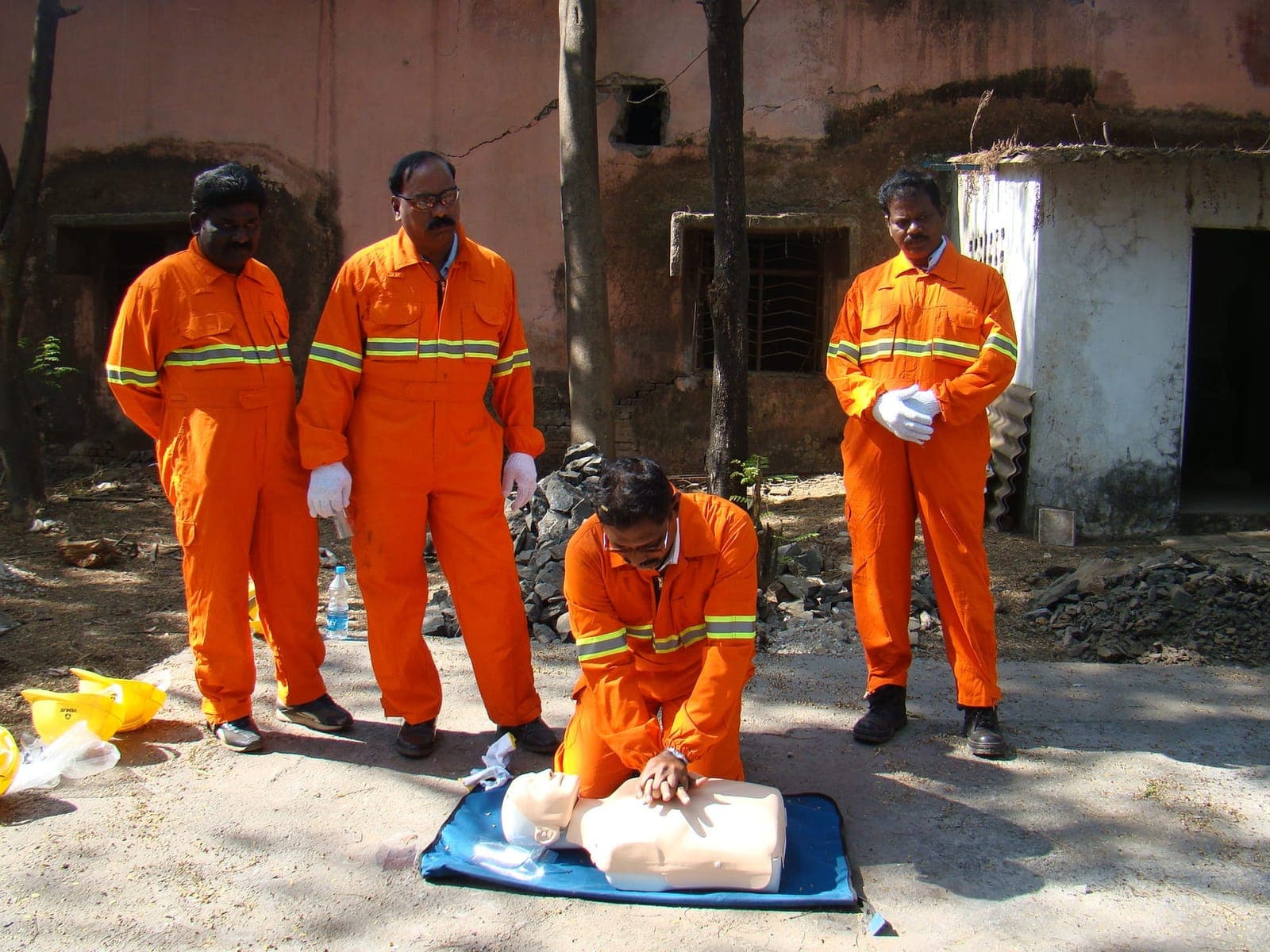
This is the part that matters most. Equipment does not treat anyone. A well-stocked box beside someone who does not know how to open an airway, control bleeding or recognise the signs of a cardiac arrest changes very little.
Provision means three things together: the right equipment, in the right place, and enough trained people on each shift and each rotation — including cover for leave and night work.
A reasonable annual routine
- Review the risk assessment and ask whether the work has changed.
- Re-check the number of trained first aiders against shift patterns.
- Audit every kit and restock it.
- Rehearse the call-out: who is called, how they are contacted, where they meet the casualty, and how emergency services are guided in.
If you want to build that capability, our first aid programmes cover both the skills and the workplace context. Our team confirms course duration, content and joining details on enquiry.
Content adapted from Eduforce's related safety and training publications.
Related training
Need help developing workplace safety capability?
Talk to Eduforce about training, consultancy and safety solutions.
Rakesh Temkar
Author
Writes on first aid, health and workplace safety for Eduforce.