A workplace fire has three possible stories. In the first, it never starts, because the conditions were controlled. In the second, someone trained and equipped puts it out while it is still the size of a bin. In the third, the building is evacuated in good order and the fire service deals with it. The stories that end badly are the ones where the site was prepared for none of these.
Prevention: the work that stops the fire starting
Fire needs fuel, heat and oxygen, and workplace prevention is mostly about keeping the first two apart:
- Housekeeping. Accumulated packaging, oily rags, dust in ducts and stored flammables near ignition sources are the most common fuel. A clear site burns less.
- Hot work control. Welding, cutting and grinding are controlled by a permit: fuel removed or shielded, a fire watch during and after the work, extinguisher at hand.
- Electrical maintenance. Overloaded sockets, damaged cables and dust-choked motors and panels are a leading ignition source in industrial premises.
- Flammable storage. Quantities minimised at the point of use, containers closed, stored in ventilated, designated areas away from ignition.
- Smoking control in designated areas only.
None of this is exciting, which is exactly why it slips.
Fight or leave?
Every employee should be able to answer this instantly. A fire is fought only when:
- It is small — contained in the item it started in
- The right extinguisher is at hand and the person is trained to use it
- The exit is behind them and they can leave the moment it does not work
- The alarm has been raised first
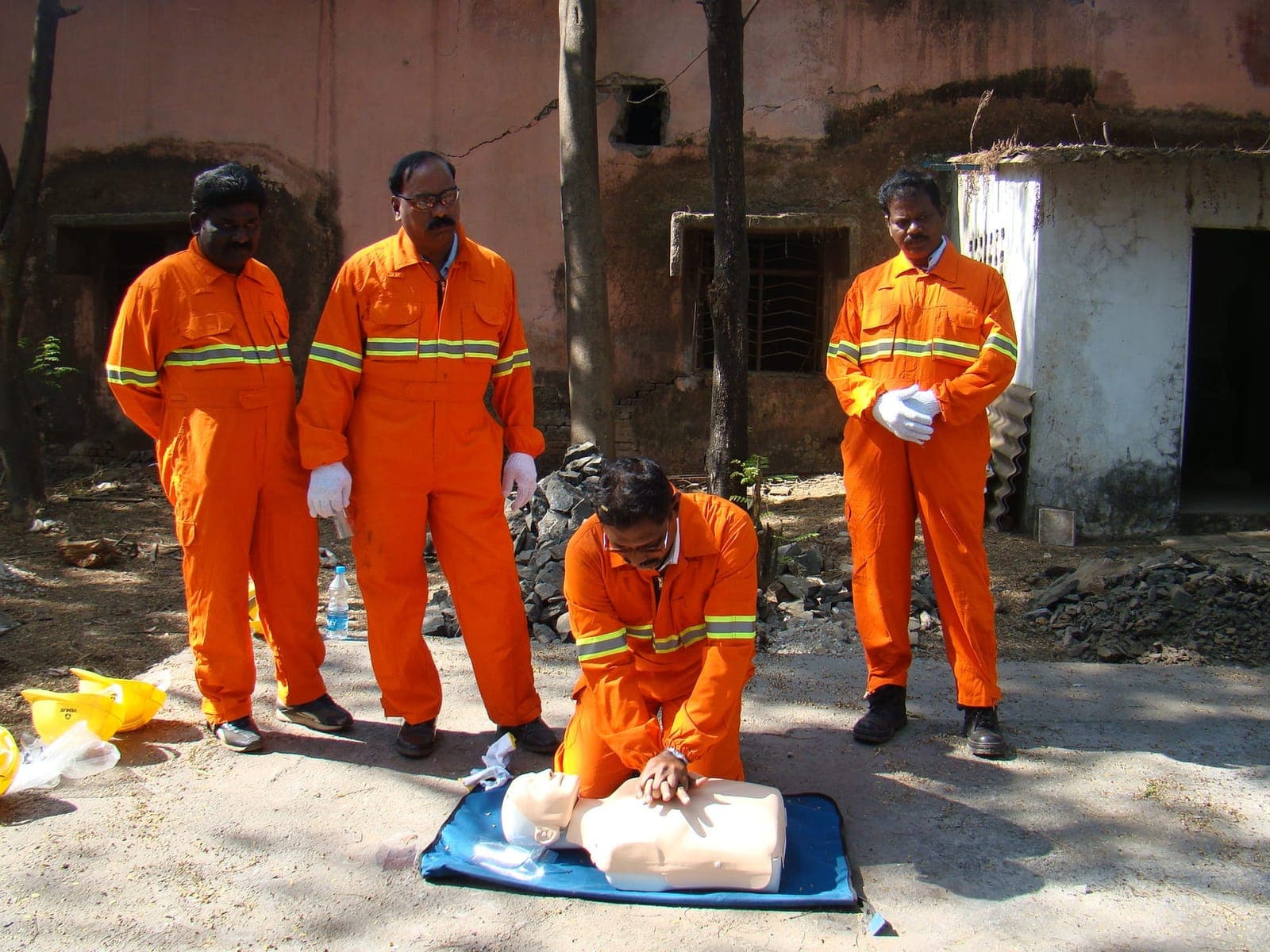
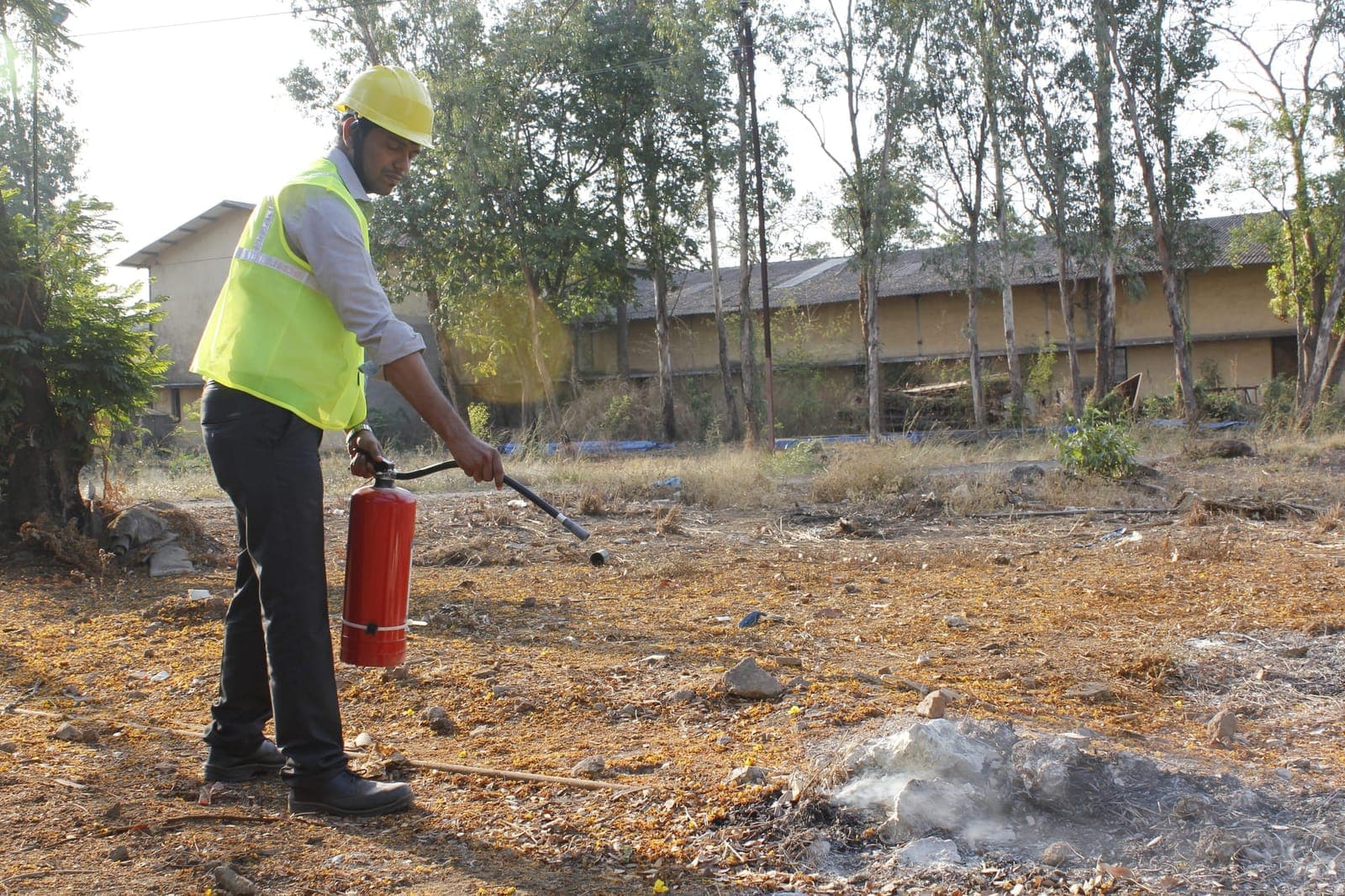
If any of these is not true, the answer is to leave. The training that makes the difference is practical: a Fire Safety session where each participant discharges an extinguisher on a live fire, learns which agent suits which fire, and feels how quickly a small fire grows. Reading the pictogram on the wall is not the same thing.
The emergency plan
A written emergency plan sets out, for each building and shift:
- How the alarm is raised and what it sounds like
- Escape routes — at least two, kept clear, signed and lit
- Fire wardens for each area, with deputies for absences and night shifts
- Assembly points away from the building and clear of the fire service's access
- The roll call — who counts, against what list, and how the count reaches the incident controller
- Arrangements for visitors, contractors and anyone who needs help to evacuate
- Who liaises with the fire service on arrival
Our Emergency Response Planning service builds this plan around the site as it actually operates; the Emergency Response Planning programme trains the people who will run it.
The drill
A plan that has never been tested is a hypothesis. Evacuation drills — announced at first, then unannounced — are the only way to discover that:
- The rear fire exit is chained
- The alarm cannot be heard over the compressor
- The night-shift warden left six months ago
- The roll-call list is the one from the last reorganisation
- The assembly point is now where the contractors park
Drills are timed, observed and followed by a short review that assigns each finding an owner. The Evacuation Training & Mock Drill programme runs exactly this cycle.
Keeping it current
Extinguishers expire, hydrant valves seize, signage fades and people move on. A periodic fire safety audit checks the equipment, the plan and the training records together — because a site can have all three and still be unprepared if any one of them is out of date.
Related training
Related consultancy & audit services
Need help developing workplace safety capability?
Talk to Eduforce about training, consultancy and safety solutions.
Eduforce Team
EHS Training & Safety Solutions
Practical safety guidance from the Eduforce trainers and consultants — written from the training centre, the classroom and the site.
More about Eduforce