
The heart attack that causes the most harm at work is rarely the one that looks like an emergency. It is the one where someone sits down, says they are fine, and waits to see whether it passes.
What it actually looks like
A heart attack occurs when blood supply to part of the heart muscle is blocked. Muscle starts to be damaged from that moment, which is why time matters so much.
The presentation is often less dramatic than expected:
- Chest discomfort — pressure, tightness, heaviness or squeezing rather than sharp pain. It may come and go.
- Discomfort spreading to one or both arms, the neck, jaw, back or stomach.
- Breathlessness, with or without chest discomfort.
- Cold sweat, nausea, vomiting, or sudden unexplained fatigue.
- Light-headedness or a sense that something is badly wrong.
Symptoms vary between individuals. Some people — particularly women, older people and people with diabetes — may have no significant chest pain at all, and may present mainly with breathlessness, fatigue, nausea or back and jaw discomfort. A responder waiting for classic chest pain before taking it seriously can miss it entirely.
Heart attack and cardiac arrest are different
The terms get used interchangeably and should not be.
- A heart attack is a blocked blood supply to heart muscle. The person is usually conscious and breathing. It is a medical emergency, and it can lead to cardiac arrest.
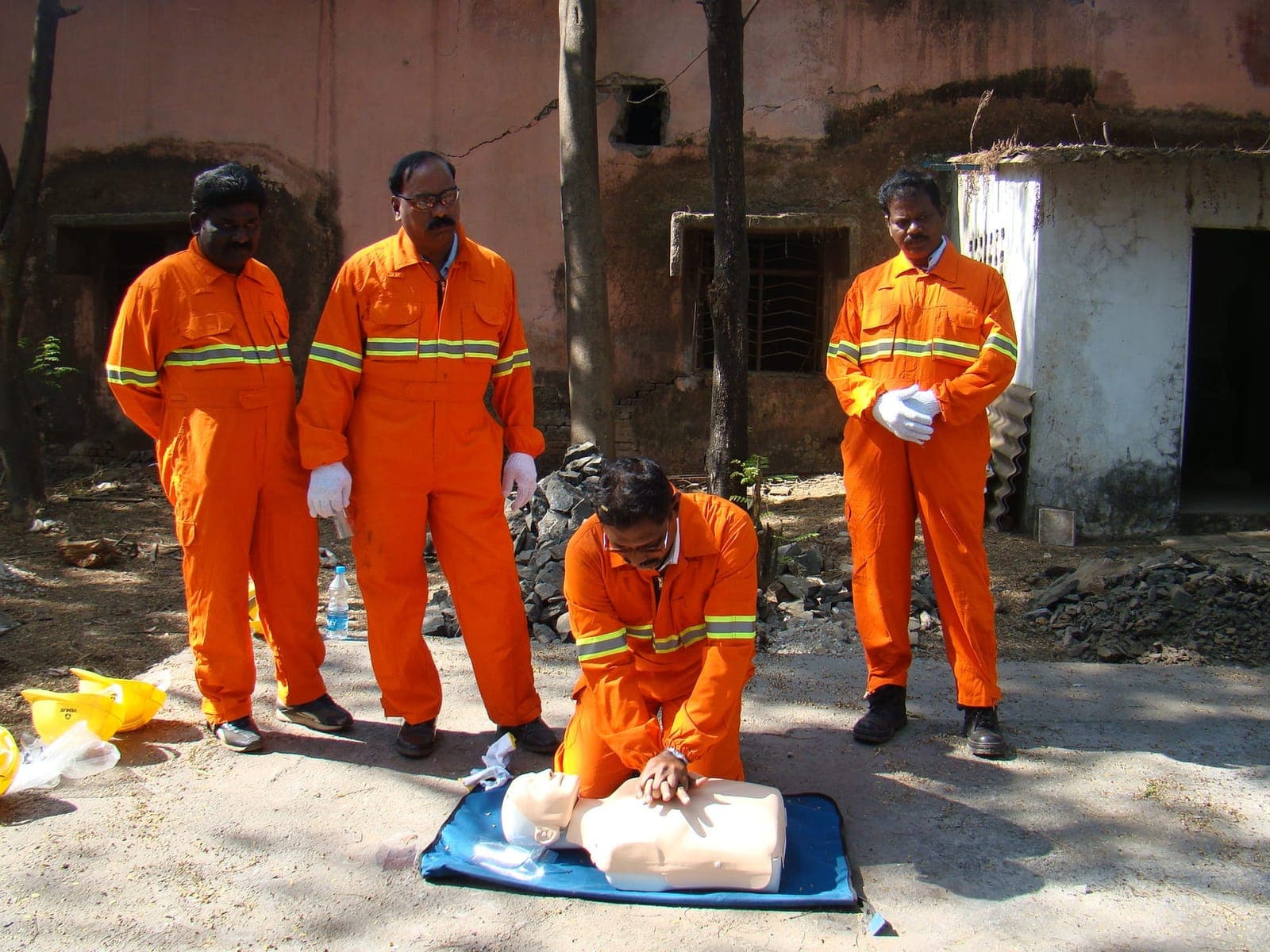
- A cardiac arrest means the heart has stopped pumping effectively. The person is unresponsive and not breathing normally. This is when CPR and a defibrillator are needed immediately.
Knowing which you are looking at determines what you do next.
What to do
For a suspected heart attack:
- Call emergency services immediately. Do not wait to see whether it settles, and do not let the person talk you out of calling.
- Sit them down and keep them still and calm. A half-sitting position with knees bent and back supported is usually comfortable.
- Loosen tight clothing, and keep the surroundings quiet and uncrowded.
- Do not let them walk to a vehicle or drive themselves. Exertion increases demand on a heart that is already short of supply.
- Ask about prescribed medication. If they carry medication for a known heart condition, help them take their own as prescribed.
- Stay with them and monitor. If they become unresponsive and stop breathing normally, start CPR and send for a defibrillator.
Any advice about aspirin or other medicines should follow local emergency-service instruction and the person's own medical situation — it is not a decision to take on a responder's own initiative.
Why people delay
Denial is the common factor. People attribute the symptoms to something ordinary, do not want to cause a fuss or lose a shift, or convince themselves it will pass.
A workplace can reduce that delay more effectively than any equipment purchase: make clear that calling for help early is always the right call, that nobody will be criticised for a false alarm, and that colleagues are expected to act on what they see even when the person says they are fine.
Being ready
Readiness means trained responders on every shift, a known route for emergency vehicles, someone briefed to meet and guide them in, and — where a defibrillator is provided — people who know where it is and are not afraid to use it.
Our first aid with CPR and basic life support programmes cover recognition, resuscitation and defibrillator use.
This article is general workplace first aid guidance and is not medical advice. Follow the direction of emergency services and qualified medical professionals.
Content adapted from Eduforce's related safety and training publications.
Related training
Need help developing workplace safety capability?
Talk to Eduforce about training, consultancy and safety solutions.
Rakesh Temkar
Author
Writes on first aid, health and workplace safety for Eduforce.
