Personal protective equipment is the most visible safety control on any site and the least reliable. A hard hat does nothing about a falling object until the object has already fallen; a harness does nothing about a fall until the fall has happened. That is why PPE sits at the bottom of the hierarchy of controls — after eliminating the hazard, substituting it, engineering it out and controlling it administratively.
None of which makes PPE optional. On real sites, residual risk remains after every other control, and for that risk PPE is what stands between the worker and the injury. The question is whether it is the right PPE, worn the right way, every time.
Select for the hazard, the task and the person
PPE selection starts from the risk assessment, not the catalogue. For each residual hazard:
- What exactly is it? "Eye protection" is not a specification. Grinding sparks, chemical splash and UV from welding each call for different equipment, and the wrong choice can be worse than none.
- What does the task involve? A respirator that is adequate for a short task may be unbearable for an eight-hour shift; a full-body harness for fall arrest is a different item from a positioning belt.
- Who is wearing it? Face shape affects respirator seal; body size affects harness fit; a worker with glasses needs eye protection that works over them.
Where more than one item is worn — helmet, ear defenders, eye protection and a respirator together — check compatibility: each item must still do its job with the others in place.
Fit is a safety-critical property
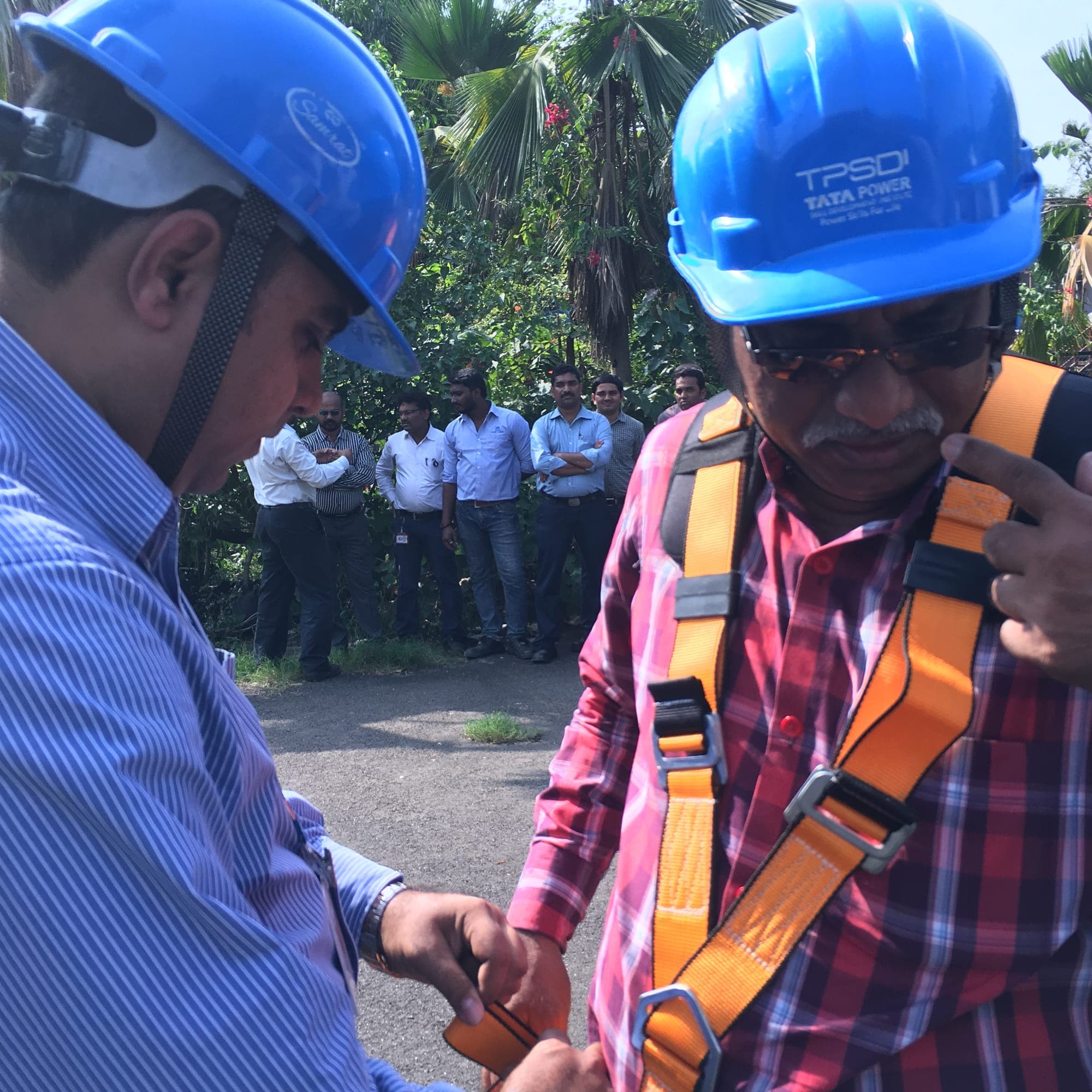
A harness that fits loosely allows the wearer to slip out or be injured by the straps in a fall. A respirator that does not seal to the face lets contaminated air straight in around the edges — and the wearer feels protected. Fit is not comfort; it is function.
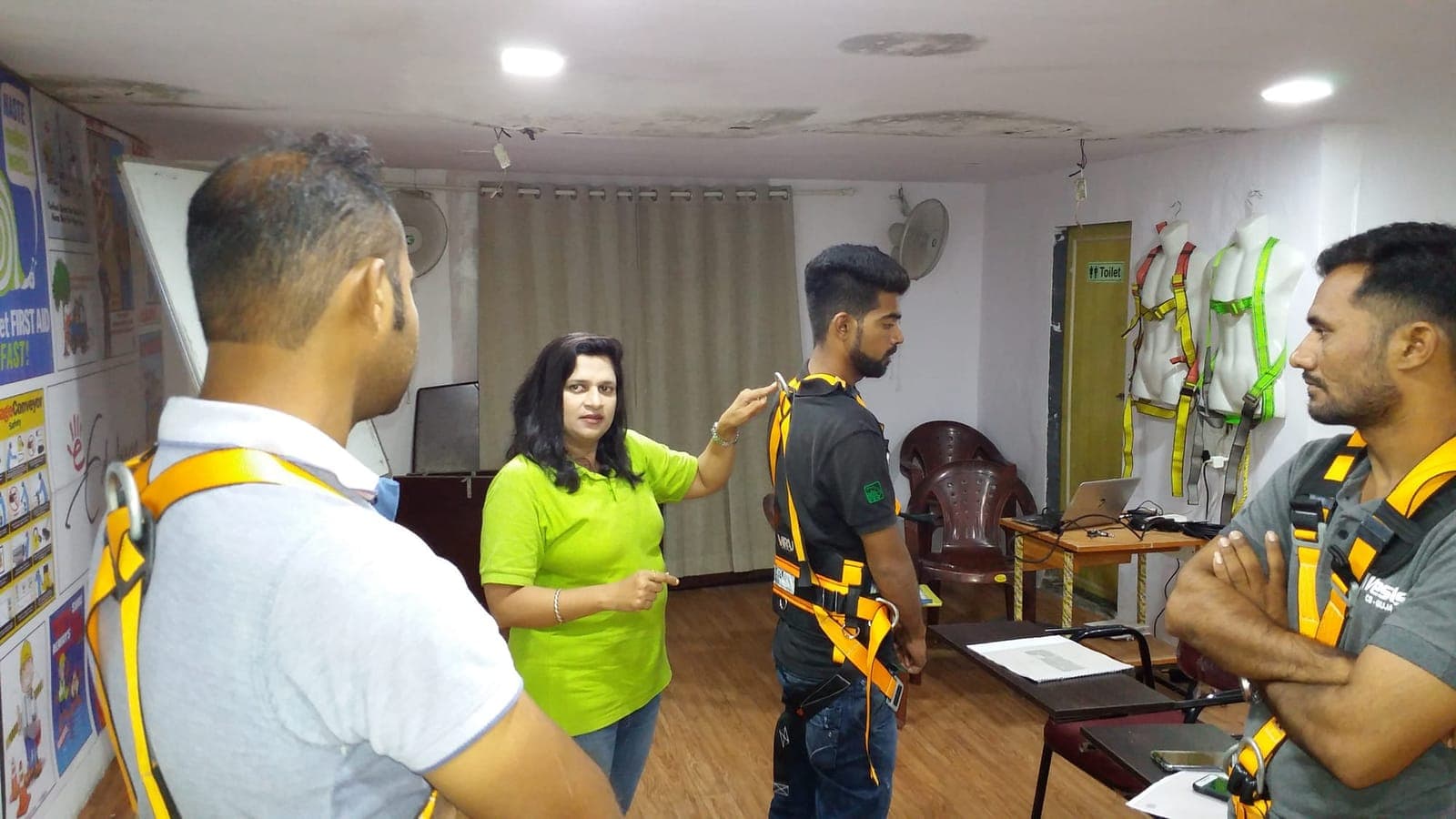
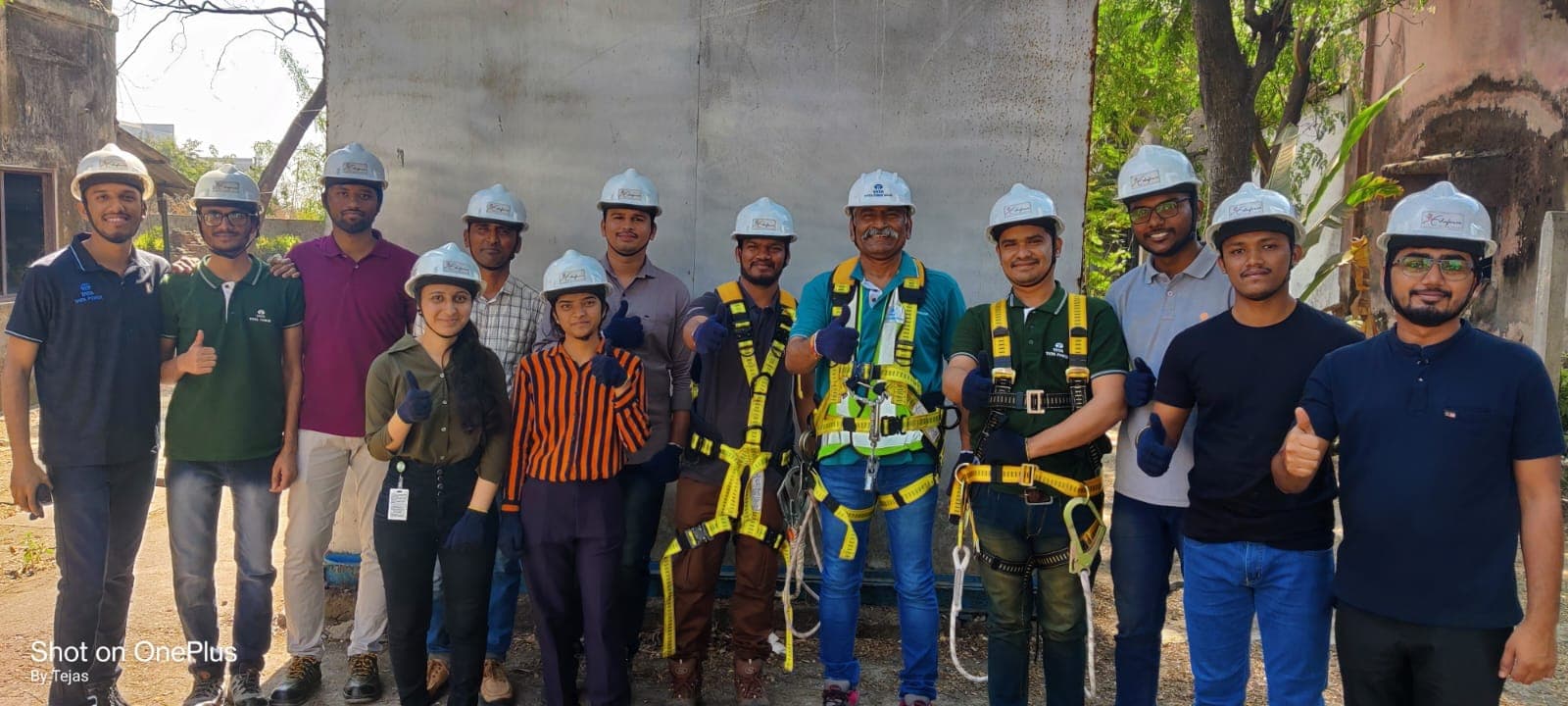
Fit-testing is essential for tight-fitting respiratory protection. For harnesses, fit is checked on every donning: dorsal attachment between the shoulder blades, chest strap mid-chest, leg straps snug. For helmets, the cradle is adjusted so the shell sits level and stays put when the wearer looks down.
Inspect, store, withdraw
PPE degrades in use, in storage and with time:
- Before every use — the wearer checks for damage: cuts and burns in webbing, cracks in shells and lenses, perished rubber, expired filters.
- Periodically — a competent person inspects and records fall-protection equipment and other safety-critical items, at the interval set by the manufacturer and site procedure.
- Storage — dry, clean, out of direct sunlight, away from chemicals and sharp edges. A harness left in a truck cab in the sun ages faster than one used daily and stored properly.
- Withdrawal — anything damaged, expired, or loaded in an incident is taken out of service and recorded. For fall-arrest equipment this is non-negotiable.
Our PPE Selection & Inspection and PPE Inspection & Certification services cover the selection logic and the periodic competent-person inspection respectively.
The mistakes that defeat PPE
In audits and training, the same failures appear repeatedly:
- Issued but not trained. Workers are given equipment without being shown how to fit, check and maintain it.
- Right kit, wrong task. A dust mask worn for solvent vapour; a restraint lanyard used for fall arrest.
- Modified equipment. Helmets drilled for accessories, harnesses with home-made repairs.
- Selective use. PPE worn when the supervisor is present and removed when the job gets awkward.
- No reporting. Damaged items kept in service because replacing them takes paperwork.
Training closes the loop
PPE only becomes a control when people know when it is required, why, how to fit it, how to check it and what to do when it fails. That knowledge is built into every practical programme Eduforce runs — a fall protection course is as much about the harness as the anchor, and a respiratory protection course is about the seal, not just the filter.
Related training
Related consultancy & audit services
Need help developing workplace safety capability?
Talk to Eduforce about training, consultancy and safety solutions.
Eduforce Team
EHS Training & Safety Solutions
Practical safety guidance from the Eduforce trainers and consultants — written from the training centre, the classroom and the site.
More about Eduforce