A scaffold is not equipment; it is a temporary structure, assembled on site by people, on ground that was not built for it, and altered by everyone who uses it. Treated that way — designed, erected by competent people, inspected and protected from casual alteration — it is one of the safest ways to work at height. Treated as a pile of tubes and boards, it is one of the most dangerous.
Before a tube is lifted
Every scaffold needs a plan. For standard configurations that may be the manufacturer's or supplier's instructions; for anything unusual — tall, loaded, sheeted, cantilevered, or on a structure that cannot take ties — it needs a specific design. The plan states the load class, the tie pattern, the bracing and the foundation requirements.
Ground comes next. Scaffolds fail from the bottom up: standards placed on soft ground, on a slope, over a service trench or on an unbraced sole board sink, and the structure above follows. Base plates and sole boards spread the load; the ground under them is checked, not assumed.
During erection
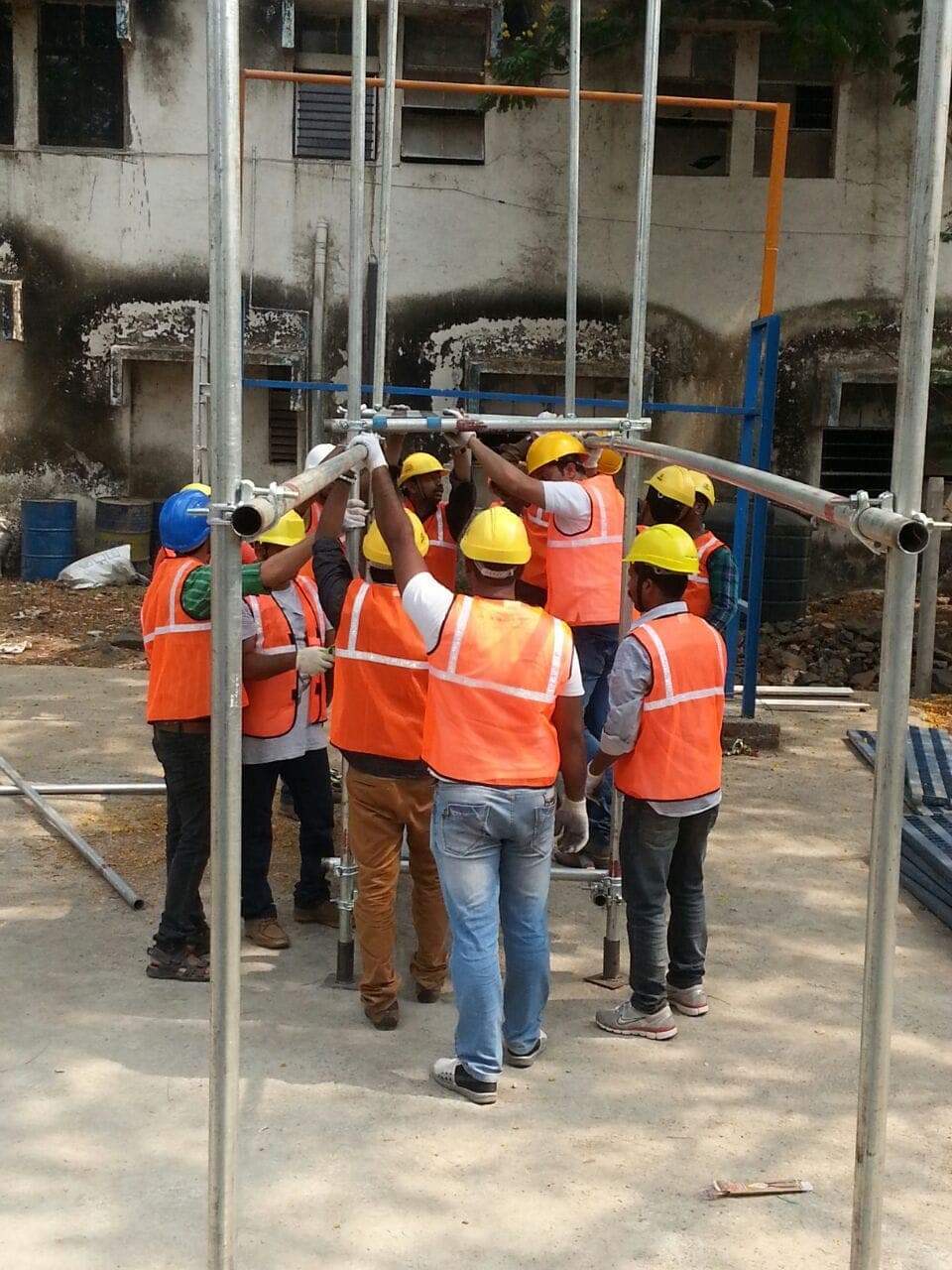
The people erecting the scaffold are working at height on an incomplete structure. They need:
- Fall protection appropriate to the stage — the scaffold does not protect them until it is complete.
- Bracing and ties installed as the lift goes up, not "once we have the height". An untied scaffold is a lever with the wind at one end.
- Components in good condition — bent tubes, corroded couplers and split boards are rejected at the stack, not discovered in the structure.
- Guardrails, toe boards and full boarding on every working platform before it is used.
A scaffold under erection, alteration or dismantling is marked as such so nobody climbs a platform that is not yet finished.
Inspection and tagging
A completed scaffold is inspected by a competent person before first use, and again:
- After any alteration
- After adverse weather — high wind, heavy rain, anything that could move it
- At a regular interval set by site procedure while it remains in use
The inspection checks what the plan called for: foundations, standards and ledgers, bracing, ties, platforms, guardrails, access ladders and the loads actually placed on it. The result is recorded and shown on a tag at the access point — green for safe to use, red for do not use. A scaffold with no tag is treated as unsafe.
Our Scaffolding Inspector Course trains the people who sign those tags; Basic Scaffolding Erection & Dismantling trains the crews who build them.
The user's part
Most scaffold-related falls happen not during erection but during use, and often because the structure was quietly modified:
- A guardrail removed to pass materials and never replaced
- Boards lifted to reach a lower level
- A tie unfastened because it was in the way of cladding
- A ladder set on the platform to gain "just a bit more height"
- A platform overloaded with stacked materials
Everyone who uses a scaffold needs to know one rule: if it needs changing, stop and call the scaffolders. Users do not alter scaffolds. That instruction is part of the working-at-height briefing on every site, and it is enforced by supervisors walking the structure, not by a sign at the gate.
Bringing it together
Scaffold safety is a chain: design → ground → competent erection with fall protection → inspection and tagging → disciplined use → controlled dismantling. Every link is a known control. The incidents come when a link is skipped because the programme was late, and the training that prevents them is the training that makes the controls habitual rather than optional.
Related training
Need help developing workplace safety capability?
Talk to Eduforce about training, consultancy and safety solutions.
Eduforce Team
EHS Training & Safety Solutions
Practical safety guidance from the Eduforce trainers and consultants — written from the training centre, the classroom and the site.
More about Eduforce