Solar farms have a reputation as the gentle end of the energy industry: no rotating blades, no pressure vessels, no hydrocarbons. The reputation hides a set of hazards that injure people precisely because they are underestimated.
Live DC that cannot be switched off
A PV module produces voltage whenever light falls on it. String voltages on utility-scale sites run to hundreds of volts DC and beyond — and unlike an AC circuit, there is no upstream breaker that makes the array dead. Opening the inverter isolator leaves every string live back to the modules.
That changes the rules:
- Treat every conductor on the DC side as live unless it is covered, physically disconnected and proven dead.
- DC arcs do not self-extinguish the way AC arcs do at the zero crossing. A pulled connector under load, a damaged cable or a corroded joint can sustain an arc that starts a fire.
- Connectors are mated only when the string is open-circuit; mismatched or partially engaged connectors are a leading fault source.
- Lock-out procedures, insulated tools and test equipment rated for the voltage are basic, not optional.
The Solar Safety Training programme follows the GWO standard for exactly this environment, and Electrical Safety covers the underlying principles.
Heat, sun and distance
Solar sites are, by design, in places with strong sun and little shade. Technicians spend shifts walking rows of panels that radiate heat back at them:
- Heat stress develops gradually and impairs judgement before the person notices. Water, shade breaks, acclimatisation for new workers and a buddy system are controls, not comforts.
- Sun exposure — long sleeves, hats and eye protection against glare off the glass.
- Distance. Rows can be hundreds of metres long, vehicles are limited, and a collapsed worker may be far from the nearest colleague. Radio contact and a check-in routine matter.
Height and fragile surfaces
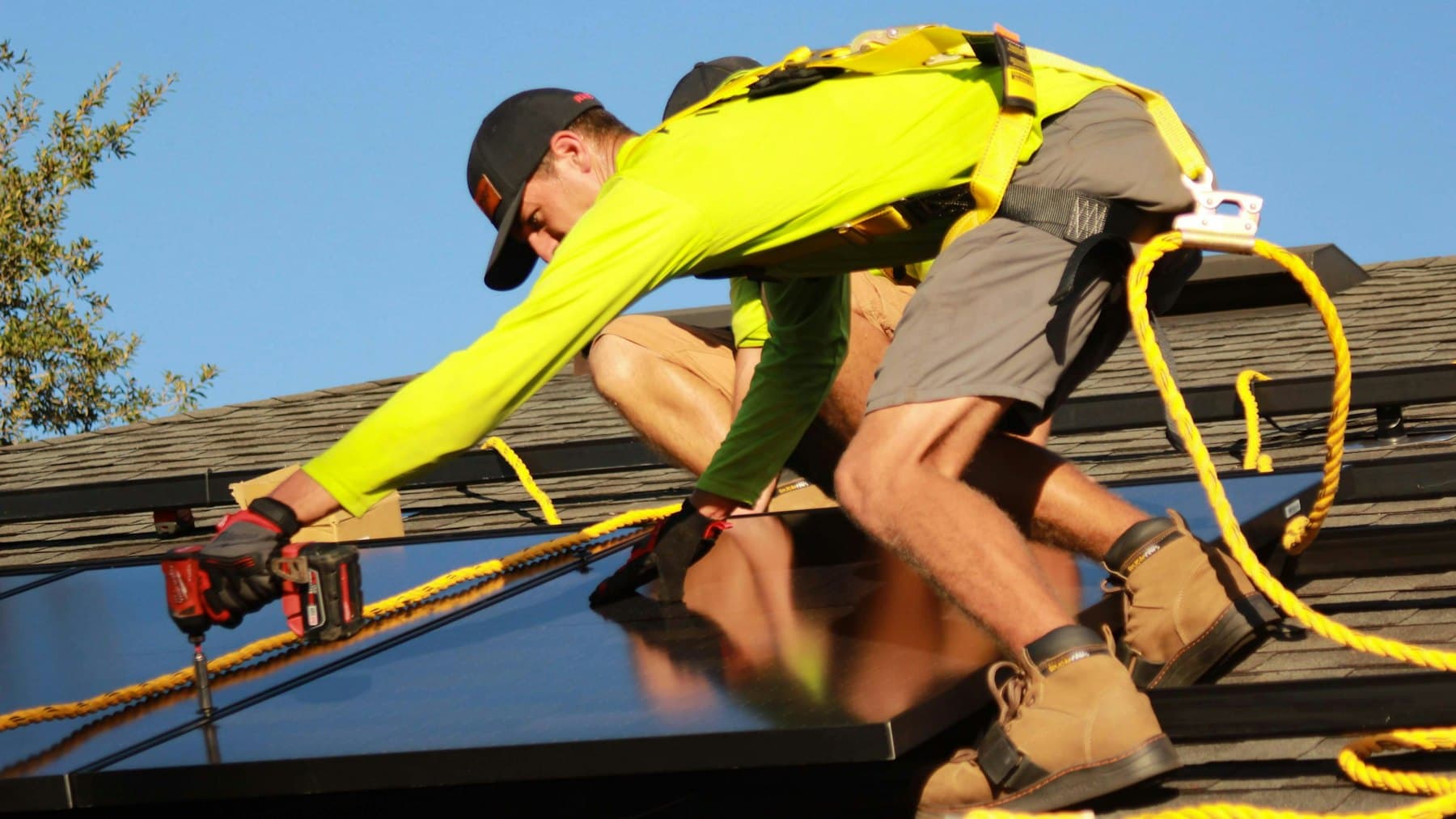
Rooftop PV is working at height with an added hazard: fragile roof sheets and skylights hidden under or between panels. Ground-mounted trackers and elevated structures put technicians on ladders and platforms in wind. The fall protection discipline is the same as anywhere else — edge protection, anchors, harness, rescue plan — with the added rule that nobody steps where they cannot see the surface.
Mechanical and environmental hazards
- Trackers move. Isolation before maintenance, and awareness that a tracker can move under automatic control.
- Manual handling of modules — large, awkward, glass-fronted and often carried in wind.
- Vehicles on unmade tracks alongside people on foot.
- Wildlife, particularly snakes and insects in vegetation beneath and between rows.
- Weather — lightning on an open site with metal structures, dust storms, flash flooding of cable trenches.
Emergency response on a remote site
The single most important planning question for a solar site is: if someone is electrocuted, collapses from heat or falls at the far end of the array, what happens in the next ten minutes? Ambulance response to rural sites is measured in tens of minutes at best. The site needs trained first aiders on every shift, an AED, a way to reach and move a casualty, and a plan that has been rehearsed. First Aid with CPR is the minimum; the GWO solar standard treats it as core.
The competent solar technician
The GWO solar standards exist because the industry recognised that "electrician" or "construction worker" was not a sufficient description of the competence needed. Solar Technical Training builds the technical basis; Solar Safety Training builds the habits. Together they describe a technician who understands why the array is never dead, and works accordingly.
Related training
Need help developing workplace safety capability?
Talk to Eduforce about training, consultancy and safety solutions.
Eduforce Team
EHS Training & Safety Solutions
Practical safety guidance from the Eduforce trainers and consultants — written from the training centre, the classroom and the site.
More about Eduforce